- hospital.lasalud@grupohla.com
- +34 956 225 301

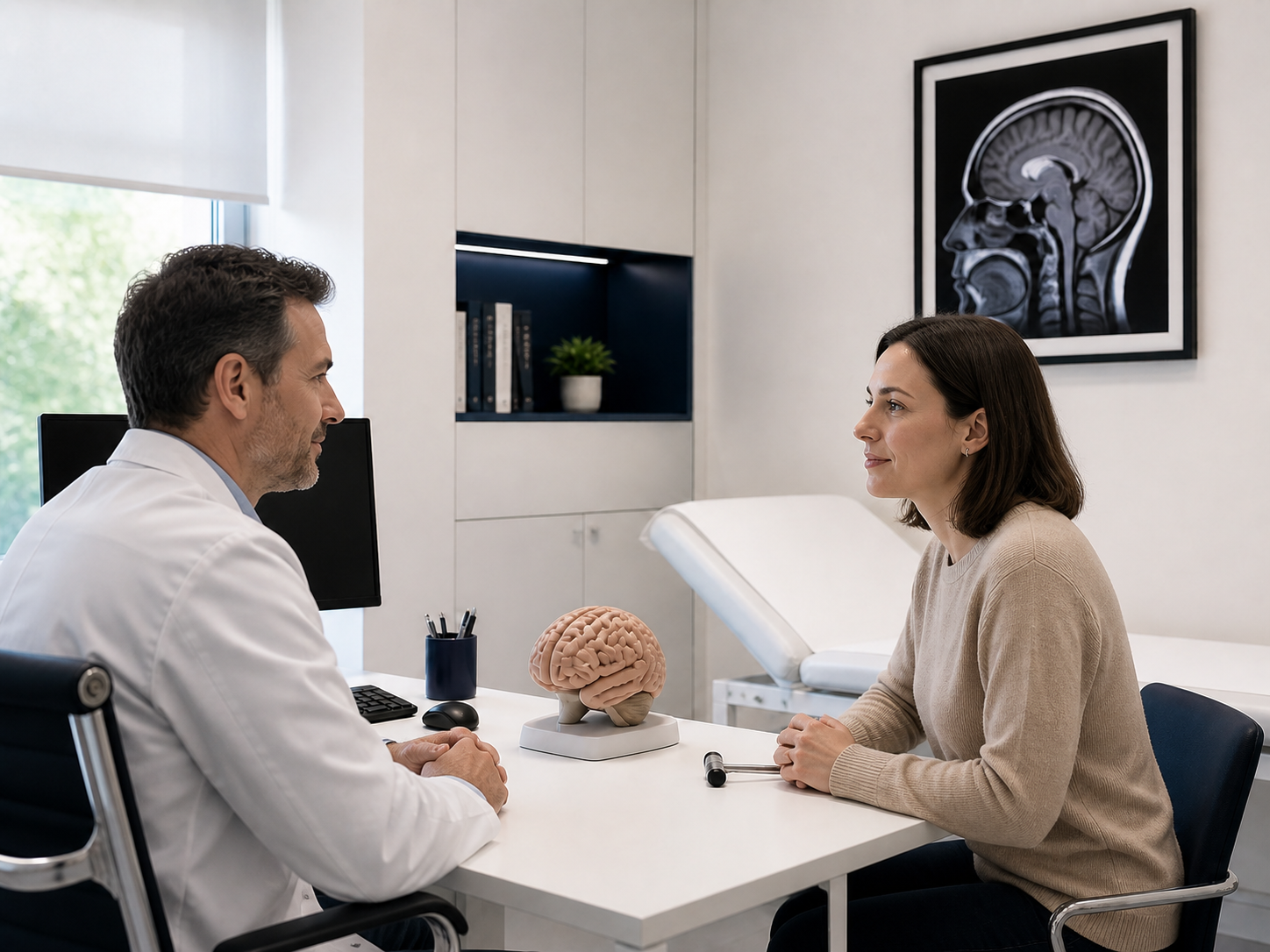
Neurology is the medical specialty that deals with the diagnosis and management of diseases of the central and peripheral nervous system: the brain, spinal cord, nerves and muscles. It ranges from very common conditions—such as headaches or vertigo—to more complex chronic diseases such as epilepsy, Parkinson's or multiple sclerosis.
Many neurological symptoms —such as persistent headaches, tingling or dizziness— are treatable if diagnosed correctly. You shouldn't normalise them or wait for them to get worse.
Headache is one of the most common reasons for consulting a neurologist. When headaches are severe, frequent or change in pattern, they require a neurological assessment to rule out secondary causes and determine the most appropriate treatment.
The presence of accompanying symptoms — nausea, visual disturbances, sensitivity to light or noise, tingling in the face or hands — can point towards a migraine or other forms of headache that benefit from specific preventative treatment.
Central vertigo — unlike inner-ear vertigo, which is treated by an ENT specialist — requires neurological assessment. Recurrent dizziness, especially if accompanied by vision changes, difficulty walking, or loss of strength, should be investigated by a neurologist.
Epilepsy is a chronic condition that requires ongoing neurological follow-up for the adjustment of antiepileptic treatment and the prevention of seizures. Diagnosis is supported by the electroencephalogram, available at the same centre through the neurophysiology service.
Parkinson's, dementia and other neurodegenerative diseases require early diagnosis and specific neurological follow-up to optimise treatment and preserve the quality of life of the patient and their family.
Multiple sclerosis is a chronic autoimmune disease of the central nervous system that requires specialist diagnosis, management and monitoring. Advances in disease-modifying treatments have significantly improved patients' prognosis in recent years.
A stroke is a medical emergency requiring immediate assessment. Following the acute phase, neurological follow-up is essential for rehabilitation, the prevention of recurrences and the control of risk factors.
Tingling, numbness, pain or loss of strength in the limbs may indicate peripheral neuropathy requiring diagnosis and specific treatment. Electromyography, performed by the neurophysiology department, is essential for its diagnosis.
Neurology specialists with a focus on pathology of the central and peripheral nervous system.
The availability of the neurophysiology service in the hospital allows electroencephalograms, electromyographies and evoked potentials to be performed without external referrals, speeding up diagnosis.
When a neurological condition requires surgical evaluation, the hospital's neurosurgery team can intervene in a coordinated manner.
Acute neurological complications can be treated in the hospital with the available resources when necessary, including its own ICU.
Check your insurance cover for neurological consultations and tests.
Do not normalise symptoms such as persistent headaches, tingling, recurring dizziness or memory alterations. Book your consultation and get a neurological assessment in Cádiz.
We work with the leading insurance companies and health mutuals. Explore and search for your health insurance with a complete guarantee of care:

If your insurer or mutual society is not on this list, or if you are attending privately, please consult us directly at reception.
Access our medical network with the best conditions in the centre of Cádiz.
Our consultation rooms and operating theatres are prepared to offer you the best diagnosis and comprehensive treatment. Book your appointment or contact our hospital in Cádiz.